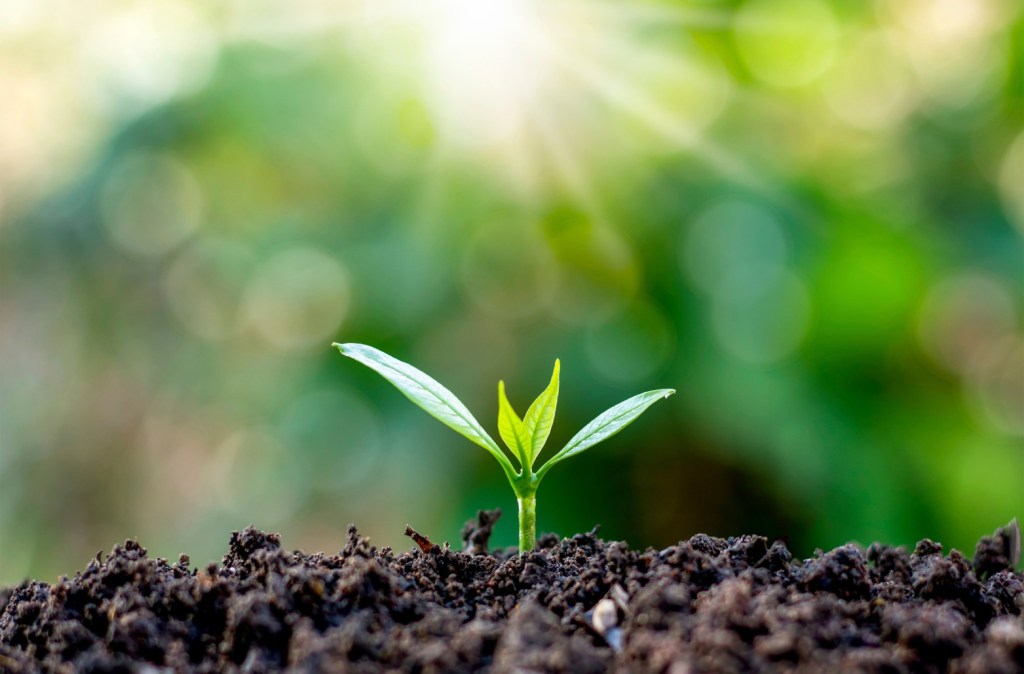
Regenerative agriculture is a holistic farming approach that focuses on minimizing soil disturbance and erosion through practices such as minimal or no-tilling land, planting cover crops, reducing chemical pesticides and fertilizers, and rotating crops.
Regenerative agricultural practices provide the following benefits:

Climate
- Increases land’s ability to filter and retain water, providing resiliency to drought and floods
- Captures carbon from the air and stores it in the soil, mitigating the effects of climate change
Soil Health & Fertility
- Prevents soil degradation & erosion
- Replaces nutrients & natural fertilizers

Resource Use Efficiency
- Decreases chemical fertilizers by 45% on average
- Reduces costs
- Increases farmland utilization and diversifies farm income

Crop Yields & Quality
- Increases yields 3% on average
- Produces more nutrient-dense crops with fewer chemical contaminants
- Increases crop resistance to pests
 Mineral Ridge Livestock & Forage